Posted 1 month ago

Still have questions?
If you have any questions, feel free to contact us at support@stratis.com. A member of our support team will help you shortly.
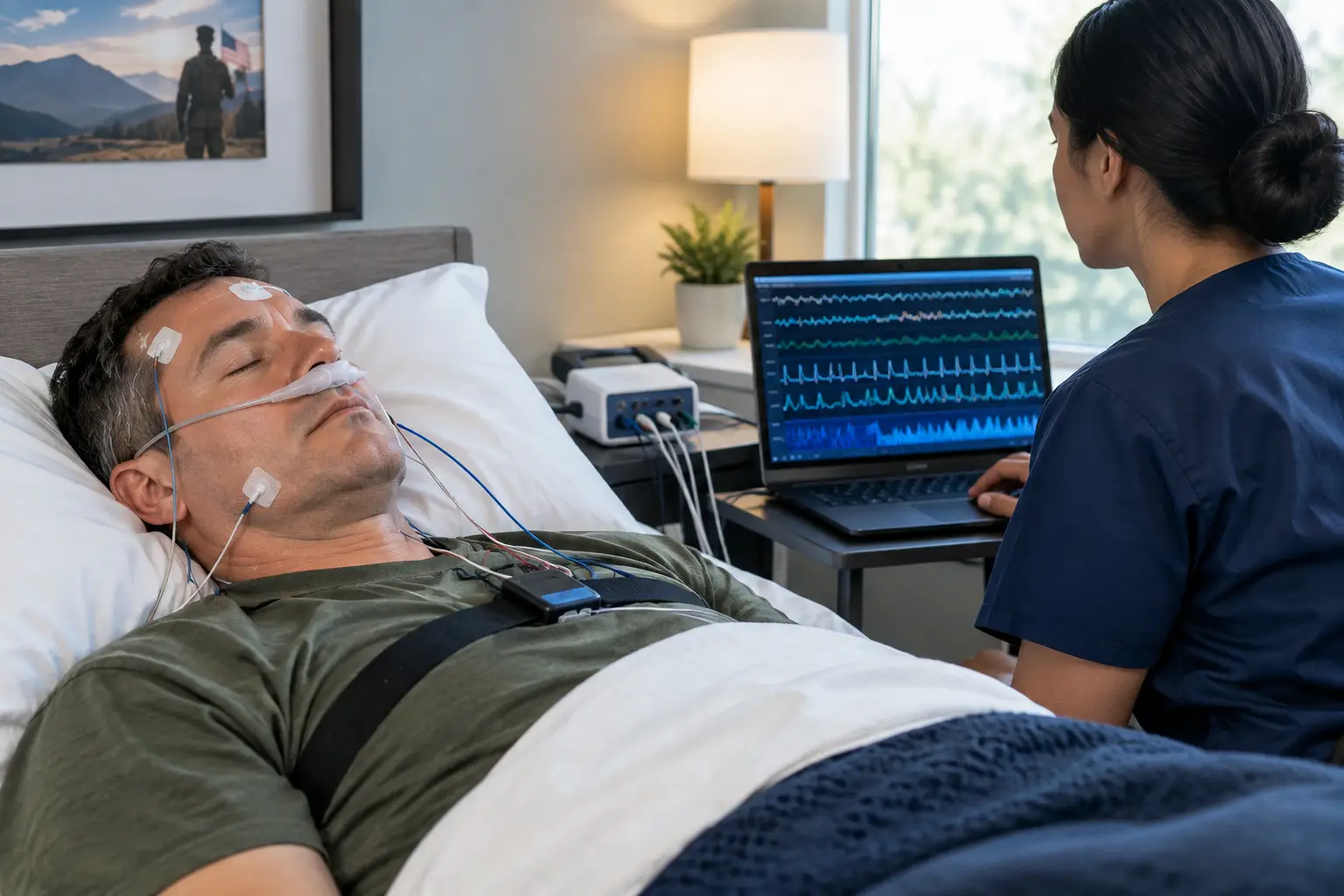
A sleep apnea claim can look obvious to the veteran and still fail on paper. You snored in the barracks, woke up choking, fell asleep in briefings, and now use a CPAP. That history may matter, but the best evidence for sleep apnea in a VA claim is not a single symptom, a CPAP prescription, or a generic nexus letter. It is a documented medical story that fits the claimed theory of service connection.
That distinction matters because obstructive sleep apnea is commonly diagnosed years after separation. The VA reviewer is not just looking for proof that you have the condition. They are looking for competent evidence explaining why it is at least as likely as not related to service, a service-connected condition, or a medically supportable chain of aggravation.
What Is the Best Evidence for Sleep Apnea?
For most VA claims, the foundation starts with three things: a current diagnosis, an in-service event or an already service-connected condition, and a medical link between them. The details change based on the theory of the claim, but the basic rule does not.
A formal sleep study is usually the clearest evidence of a current obstructive sleep apnea diagnosis. A CPAP order, sleep medicine notes, and follow-up records can support the diagnosis and show ongoing management. But do not confuse treatment records with nexus evidence. A machine proves you are being treated. It does not, by itself, explain why the condition should be service connected.
The strongest file usually tells a consistent story across records. Service treatment records, personnel records where relevant, post-service medical documentation, credible lay statements, weight-history documentation when medically relevant, and a well-reasoned medical opinion should not be fighting each other. If your records show symptoms beginning years later, a direct-service theory may be difficult to defend. That does not automatically end the inquiry, but it changes the strategy.
Direct Service Connection Requires More Than Snoring
Veterans often remember loud snoring, witnessed pauses in breathing, nonrestorative sleep, daytime fatigue, morning headaches, or repeated sleep problems while in uniform. Those facts can be useful. They are not automatically diagnostic of sleep apnea.
Snoring is common. Fatigue is common. Military sleep deprivation is practically a branch-wide hobby. A good claim does not pretend otherwise. It explains why the reported symptoms, their timing, their severity, and the surrounding medical evidence are consistent with the later-diagnosed condition.
For a direct claim, useful evidence may include service records documenting sleep complaints, respiratory concerns, medical visits for persistent fatigue, or related symptoms. Statements from a spouse, roommate, or fellow service member can also help establish observable facts, such as chronic loud snoring or witnessed breathing pauses. These statements are strongest when they are specific: when the behavior was observed, how often it occurred, what changed, and whether it continued after service.
Lay evidence has limits. A spouse can credibly describe witnessing gasping or apneas. That spouse generally cannot diagnose obstructive sleep apnea or provide the medical explanation connecting it to service. That is where clinical records and, when appropriate, a medical opinion do the heavy lifting.
Secondary Sleep Apnea Claims Need a Real Medical Mechanism
Many sleep apnea claims are pursued as secondary claims. This is also where bad advice spreads fast. A veteran may be told that PTSD, a sinus condition, chronic pain, tinnitus, or medication “causes sleep apnea.” Medicine is not that neat, and the VA does not award service connection because somebody found a template online.
A secondary theory must be grounded in the veteran’s actual medical record and a defensible explanation. The question is not whether two conditions can coexist. The question is whether the service-connected condition caused or aggravated the sleep apnea in this particular case, based on the available evidence.
For example, some claims may involve obesity as an intermediate step. That is not a magic phrase and it is not a shortcut. The records must support a medically coherent sequence: a service-connected condition contributed to functional impairment or another documented factor; that factor materially contributed to weight gain or inability to manage weight; and the weight gain was a substantial factor in the development or worsening of sleep apnea. Each link needs support. If one link is assumed rather than documented, the theory can fall apart.
Aggravation is another separate question. A service-connected condition may not have caused obstructive sleep apnea, but the evidence may support that it permanently worsened it beyond its natural progression. That requires more than reporting poor sleep. It requires a medical rationale that distinguishes temporary symptom overlap from actual worsening of the diagnosed condition.
What a Useful Medical Opinion Should Address
A nexus opinion is not valuable because it uses the words “at least as likely as not.” Those words matter, but they are not the opinion. The reasoning is the opinion.
A medically useful sleep apnea opinion should identify the records reviewed, state the diagnosis, clearly identify the claimed theory, and explain the clinical reasoning. It should discuss favorable evidence without ignoring unfavorable evidence. If there was a major gap between service and diagnosis, the opinion should address it rather than act like it does not exist. If body mass index, anatomical factors, tobacco history, nasal conditions, mental health symptoms, or other risk factors are relevant, they may need to be discussed honestly.
This is where many canned letters fail. They cite a few articles, repeat a conclusion, and never explain the veteran-specific facts. General medical literature can support a rationale, but it cannot replace one. A journal article showing an association between two conditions does not prove causation or aggravation for every veteran with both diagnoses.
A strong opinion also avoids overreach. If the records do not support a direct connection to service, the provider should not force one. If a secondary theory is medically plausible but undocumented, the missing evidence should be identified. A defensible opinion is built to withstand review, not merely to sound favorable.
Records That Commonly Help – and Records That Commonly Hurt
The value of evidence depends on context, but several record categories often deserve a close look:
- A diagnostic sleep study and sleep medicine records establishing the condition and its severity.
- Service treatment records showing relevant symptoms, complaints, injuries, or conditions tied to the claimed theory.
- Post-service primary care and specialty records that document onset, progression, risk factors, and treatment history.
- Competent lay statements describing observable sleep symptoms during service and continuity afterward.
- Records supporting a secondary or aggravation pathway, including functional limitations and longitudinal weight history when relevant.
Unfavorable evidence does not mean a claim is dead. It means it needs to be addressed. Common problems include a medical record that repeatedly denies sleep trouble for years after service, a substantial gap before diagnosis with no explanation, inconsistent histories, or an opinion that ignores obvious alternative risk factors.
Trying to hide unfavorable facts is poor strategy. The VA will see the records it has. The better approach is to determine whether those facts can be reasonably explained, whether a different theory fits the evidence better, or whether the claim simply is not medically strong enough right now.
Do Not Let the C&P Examination Be the First Real Explanation
A Compensation and Pension examination can be important, but it should not be the first place your claim theory is fully explained. Examiners work within the evidence available to them. If the file contains a diagnosis but no coherent connection to service, the examiner may have little basis to provide a favorable opinion.
Before an examination, review the evidence already in the record. Know the diagnosis date, the claimed theory, the relevant service history, and the major supporting documents. Be accurate and direct. Do not minimize symptoms, but do not embellish them either. A claim supported by exaggeration is a weak claim wearing a louder uniform.
Build the Claim Around the Evidence You Actually Have
The right next step is not always ordering a nexus letter. Sometimes the record already contains enough favorable medical evidence. Sometimes a missing sleep study, treatment note, or specific lay statement is more important than another opinion. Sometimes a records review shows that the proposed theory does not hold up and needs to be reconsidered before money is spent chasing it.
A careful medical evidence review can identify what supports the claim, what the VA may challenge, and whether there is a medically sound path for direct service connection, secondary service connection, or aggravation. Patriot Advisors approaches sleep apnea claims that way: records first, theory second, opinion only when the facts support it.
The goal is not to make a sleep apnea claim look stronger than it is. The goal is to give the VA a clear, medically defensible explanation of why the condition is connected to service. If that explanation is there, build it carefully. If it is not, the honest answer is more valuable than a polished piece of paper.