Posted 3 weeks ago

Still have questions?
If you have any questions, feel free to contact us at support@stratis.com. A member of our support team will help you shortly.
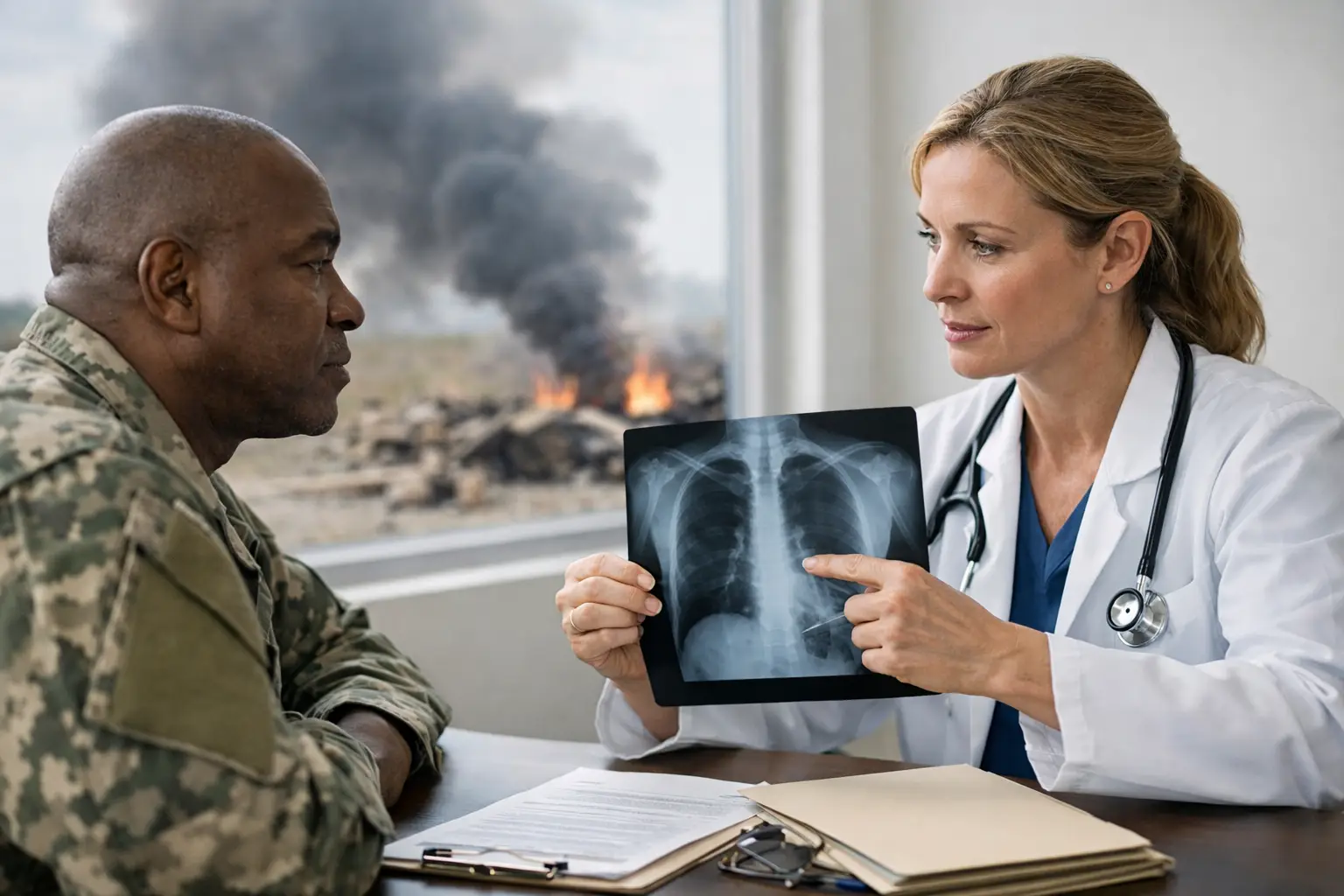
A burn pit claim is not won because a Veteran deployed, inhaled smoke for nine months, and later developed a medical condition. Exposure matters, but the VA does not compensate exposure by itself. It compensates disabilities connected to military service.
The top conditions linked to burn pits matter because some qualify for presumptive service connection, while others require a much tighter medical explanation. That distinction is where claims either gain traction or wander into the VA wilderness carrying nothing but a diagnosis and positive thinking.
Burn pits produced a filthy mixture of particulate matter, combustion products, fuels, plastics, chemicals, dust, and whatever else someone decided could disappear with enough diesel and bad judgment. But exposure is not a diagnosis, and a diagnosis does not automatically establish service connection. The evidence must support the specific claim theory being presented.
What “Linked to Burn Pits” Actually Means
Veterans often use the word “linked” to describe two very different situations.
First, a condition may be legally recognized as presumptive for Veterans with qualifying service. In that situation, the Veteran generally does not need a traditional medical nexus proving that the exposure caused the disease. The presumption supplies that connection.
Second, a condition may be medically plausible after deployment but not included on the presumptive list. That does not automatically make it a weak claim. It means the Veteran still needs evidence showing that the condition is at least as likely as not related to the documented toxic exposure, another in-service event, or an already service-connected disability.
The PACT Act expanded presumptions for numerous respiratory diseases and cancers. Still, “presumptive” does not mean “automatic approval.” The VA must confirm both the qualifying service and the actual diagnosis. A Veteran cannot claim “breathing problems” and expect the VA to select asthma, sinusitis, COPD, and interstitial lung disease from the bureaucratic buffet.
##The Locations Covered by the Presumption
Under the VA’s current guidance, exposure to burn pits or other toxic substances is presumed for qualifying service in specific locations and during specific periods.
Service period & Covered locations On or after September 11, 2001 Afghanistan, Djibouti, Egypt, Jordan, Lebanon, Syria, Uzbekistan, Yemen, and the airspace above these locations
On or after August 2, 1990 Bahrain, Iraq, Kuwait, Oman, Qatar, Saudi Arabia, Somalia, the United Arab Emirates, and the airspace above these locations
On or after August 2, 1990 Arabian Sea, Gulf of Aden, Gulf of Oman, Persian Gulf, Red Sea, and the neutral zone between Iraq and Saudi Arabia
The exact dates and locations matter. Deployment orders, personnel records, travel vouchers, flight records, awards, evaluations, and a DD214 may help establish qualifying service.
If the Veteran’s location is not on the presumptive list, the claim is not necessarily dead. It simply requires evidence establishing the actual exposure and a medically defensible connection to the diagnosed condition.
Top Respiratory Conditions Presumptively Linked to Burn Pits
Respiratory diseases are among the most common conditions associated with airborne hazards. That makes medical sense. Particulate matter and combustion smoke can irritate the nose, sinuses, airways, pleura, and lung tissue. The specific diagnosis still matters because these diseases involve different anatomy, testing, treatment, and rating criteria.
For Veterans who meet the qualifying service requirements, the VA currently recognizes the following noncancerous conditions as presumptive:
- Asthma diagnosed after service
- Chronic bronchitis
- Chronic obstructive pulmonary disease, commonly called COPD
- Chronic rhinitis
- Chronic sinusitis
- Constrictive bronchiolitis or obliterative bronchiolitis
- Emphysema
- Granulomatous disease
- Interstitial lung disease
- Pleuritis
- Pulmonary fibrosis
- Sarcoidosis
These conditions should not be treated as interchangeable.
Chronic rhinitis
Rhinitis primarily affects the lining of the nasal passages. Common findings may include chronic congestion, drainage, sneezing, nasal obstruction, and polyps.
A Veteran may report years of “sinus problems” while the medical records actually document allergic or chronic rhinitis. That distinction matters because the VA evaluates rhinitis under different criteria than sinusitis.
Chronic sinusitis
Sinusitis affects the air-filled sinus cavities around the nose and face. Relevant evidence may include recurrent infections, facial pain or pressure, purulent drainage, headaches attributed to sinus disease, antibiotic treatment, imaging, and sinus surgery.
The Veteran’s description of recurrent episodes is useful, but treatment records often determine whether the evidence supports the frequency and severity required for a compensable evaluation.
Asthma
Asthma is an inflammatory airway disorder characterized by variable airflow limitation and airway hyperresponsiveness. Medical evidence may include wheezing, shortness of breath, pulmonary function testing, inhaler use, oral corticosteroid treatment, and emergency care.
The burn pit presumption applies to asthma diagnosed after service. The diagnosis should be clinically established. An albuterol prescription alone does not automatically prove asthma because that medication can be used for several respiratory complaints.
Chronic bronchitis, COPD, and emphysema
These conditions involve chronic airflow limitation but are not identical diagnoses. Pulmonary function testing is often central to determining both the diagnosis and the appropriate disability evaluation.
Smoking history and civilian occupational exposures may still appear in the medical discussion. For a presumptive claim, however, the existence of another risk factor does not automatically erase the legal presumption. For a direct, non-presumptive claim, those competing factors generally require a more detailed medical analysis.
Interstitial lung disease and pulmonary fibrosis
Interstitial lung diseases affect the tissue surrounding the lung’s air sacs and supporting structures. Pulmonary fibrosis refers to scarring that can impair oxygen exchange and reduce lung function.
These claims often rely heavily on high-resolution imaging, pulmonary testing, oxygen measurements, specialist evaluations, and a clearly established diagnosis. A vague radiology reference to “chronic changes” is not the same as a confirmed diagnosis of interstitial lung disease.
Constrictive or obliterative bronchiolitis
Constrictive bronchiolitis affects the smallest airways and may cause exertional shortness of breath, cough, and exercise intolerance. Standard testing may not always tell the entire story, which can make these cases medically complicated.
The presumptive status helps with the nexus question, but the Veteran still needs competent evidence establishing that the disease is actually present.
Cancers Presumptively Associated With Burn Pit Exposure
The VA also recognizes broad categories of cancer as presumptively associated with qualifying burn pit and toxic exposure service. Current categories include:
- Brain cancer
- Gastrointestinal cancer of any type
*Glioblastoma
- Genitourinary cancers
- Head cancer of any type
- Hematologic and lymphatic cancers
- Kidney cancer
- Leukemias
- Lymphoma of any type
- Melanoma
- Multiple myeloma
- Myelodysplastic syndromes
- Myelofibrosis
- Neck cancer of any type
- Pancreatic cancer
- Reproductive cancer of any type
- Respiratory cancer of any type
- Urinary bladder and ureter cancers
These categories are intentionally broad, but precision still matters. “Cancer caused by burn pits” is not a complete diagnosis. The evidence should identify:
- The primary cancer site
- The pathology or histologic diagnosis
- The date of diagnosis
- Whether the disease is active or in remission
- Treatment history
- Surgical, chemotherapy, or radiation residuals
- Metastatic disease, if present
- Ongoing functional impairment
Cancer claims may also involve separately ratable residuals after treatment. The applicable diagnostic code determines how the VA evaluates active disease, treatment periods, remission, and residual disability.
This is another place where service connection and the disability percentage get mixed together. The presumption may establish the relationship to service. It does not automatically determine the rating.
Presumptive Service Connection Does Not Set the Rating
Winning service connection is only the first question. The next question is how severely the condition affects the Veteran under the applicable rating criteria.
Depending on the diagnosis, the VA may consider:
- Pulmonary function test results
- Type and frequency of inhaled medication
- Use of systemic corticosteroids
- Nasal obstruction or polyps
- Frequency and treatment of sinusitis episodes
- Surgery and postoperative residuals
- Oxygen therapy
- Active cancer treatment
- Residual impairment after cancer treatment
A Veteran can therefore receive service connection for a presumptive condition but still receive a noncompensable evaluation if the medical evidence does not meet the criteria for compensation.
The presumption gets the condition through the front gate. It does not carry the claim across the entire installation.
Conditions That Still Need a Direct Medical Nexus
Not every condition appearing after deployment is presumptive. Veterans commonly ask whether burn pits automatically establish service connection for:
- Obstructive sleep apnea
- GERD
- Migraine headaches
- Hypertension or other cardiovascular disease
- Fatigue
- Mental health conditions
- Neurologic symptoms
- Noncancerous skin disorders such as dermatitis or eczema
- Other gastrointestinal disorders
These conditions may be legitimate and disabling. They are simply not automatically presumed to result from burn pit exposure under the current list.
A direct claim may still be supportable when the evidence establishes:
- A current diagnosed disability
- A documented or conceded toxic exposure risk activity
- A competent medical relationship between the exposure and the diagnosed condition
Under 38 U.S.C. § 1168, evidence of a current disability and participation in a toxic exposure risk activity may trigger the VA’s duty to obtain an examination and medical opinion. The examiner is supposed to consider the Veteran’s total potential exposure through all applicable deployments and the combined effects of the toxic exposure risk activities.
That examination is not a guaranteed favorable nexus. It is an opportunity for the medical question to be addressed properly.
A useful toxic-exposure opinion should discuss:
- The substances or categories of exposure that can reasonably be established
- The route of exposure, such as inhalation
- The intensity, frequency, and duration of exposure when known
- The timing of symptom onset and diagnosis
- The disease’s recognized risk factors
- Relevant medical literature
- Competing causes or post-service exposures
- Why the Veteran’s individual facts support or weaken the claimed relationship
A statement that “burn pits release toxins, and toxins cause disease” is not enough. That is not a nexus. That is two vague sentences wearing a lab coat.
Sometimes Burn Pits Are Not the Strongest Theory
A Veteran may have qualifying toxic exposure and still possess a stronger claim under another theory.
For example, a condition might be:
- Directly related to documented symptoms that began during service
- Secondary to an already service-connected disability
- Aggravated by a service-connected disability
- Presumptive under a different regulation
- Related to a specific occupational exposure rather than a deployment burn pit
- Part of another diagnosed disease process
Obstructive sleep apnea is a good example. It is not currently a burn pit presumptive condition. Depending on the record, the stronger theory might involve upper-airway pathology, weight gain as an intermediate step, medication effects, or causation or aggravation by another service-connected disability.
The same principle applies to migraines, GERD, and cardiovascular conditions. Trying to force every diagnosis into a burn pit theory because the deployment is already documented can weaken an otherwise viable claim.
What makes respiratory evidence stronger
For respiratory claims, useful evidence may include:
- Pulmonary function testing
- Chest X-rays or CT imaging
- Sinus imaging
- Allergy testing
- Pulmonology, allergy, or ear, nose, and throat evaluations
- Medication history
- Emergency treatment or hospitalization records
- Service treatment records documenting respiratory complaints
- Post-service records showing the timing and progression of symptoms
- Deployment and personnel records confirming qualifying service
- Lay statements describing observable symptoms
The medical question is not always simple. A provider may need to address tobacco history, occupational exposures after service, allergies, obesity, infections, age, and other factors that could affect the condition. Ignoring unfavorable evidence does not make it disappear. A strong medical opinion addresses it directly and explains why the service exposure is or is not medically meaningful.
Personal Statements Can Help, but Keep Them Factual
A Veteran’s statement can document matters that may not appear in official records, including:
- Where the Veteran lived and worked during deployment
- Proximity to burn pits or visible smoke
- Frequency and duration of exposure
- Dust storms, fuel fumes, or other airborne hazards
- Protective equipment actually used
- Respiratory symptoms noticed during service
- Changes noticed after returning home
- Effects on work, exercise, sleep, and daily activities
The Veteran is competent to report observable events and symptoms. The Veteran should not guess at specific chemicals, diagnose pulmonary fibrosis, or declare that a disease was caused by dioxins without a medical basis.
“I worked 200 yards from the burn pit and experienced coughing and wheezing several times per week” is factual evidence.
“I inhaled benzene at a concentration sufficient to cause my current disease” is generally not, unless someone happened to deploy with an industrial hygiene laboratory in their assault pack.
The Burn Pit Registry Is Not a Disability Claim
The Airborne Hazards and Open Burn Pit Registry is a research and health-surveillance tool. Participation is optional and does not determine eligibility for disability compensation, health care, or other benefits.
Being listed in the registry does not prove service connection. Choosing not to participate does not defeat a claim. The Veteran must still file an actual disability claim and provide or identify the evidence needed to support it.
Likewise, a toxic exposure screening or favorable toxic exposure notation may help document the exposure history, but it does not replace a current diagnosis or a medical nexus when one is required.
Common Burn Pit Claim Mistakes
Claiming exposure instead of a disability
The VA compensates disability, not the fact that a Veteran breathed contaminated air. The claim should identify the diagnosed condition being claimed.
Treating every post-deployment condition as presumptive
Deployment creates a presumption of exposure in qualifying cases. It does not make every later diagnosis presumptive.
Using symptoms as diagnoses
Cough, congestion, shortness of breath, headaches, fatigue, and sleep problems are symptoms. The claim needs to identify the underlying disability when the evidence permits.
Filing several overlapping respiratory diagnoses without clarification
Asthma, COPD, bronchitis, sinusitis, and rhinitis are not interchangeable labels. The records should establish which conditions are actually diagnosed.
Assuming the registry proves the claim
It does not. The registry is separate from the compensation process.
Ignoring competing risk factors
A credible medical opinion should address smoking, civilian exposures, allergies, obesity, infections, aging, and other relevant factors. A medical opinion that avoids inconvenient facts is not strong. It is merely polite to the claimant.
Confusing service connection with the percentage
A presumptive diagnosis can establish service connection and still receive a noncompensable evaluation. The rating depends on the applicable criteria and evidence of severity.
Resubmitting a previously denied claim without the proper evidence
If the VA previously denied a condition that later became presumptive, the Veteran generally needs to file a Supplemental Claim. A new presumption does not mean an old denial will reopen itself out of professional courtesy.
A Practical Burn Pit Claim Checklist
Before filing, confirm the following:
- The records contain a clear current diagnosis.
- The claimed diagnosis appears on the current presumptive list, or the evidence supports another theory.
- Military records verify the qualifying location and service period.
- Medical records document the condition’s severity.
- Relevant diagnostic testing is included.
- Lay statements describe facts and observable symptoms without attempting medical causation.
- Competing risk factors have been identified.
- A non-presumptive claim includes a medically reasoned nexus when needed.
- The claim identifies residual conditions when applicable.
- A previously denied condition is submitted through the correct review lane.
A careful records review can determine whether the evidence supports presumptive service connection, direct toxic-exposure service connection, secondary service connection, aggravation, or no medically defensible path yet.
That last possibility is not pleasant, but it is useful. Finding the evidentiary hole before filing is much better than having the VA locate it six months later and explain it in twelve pages of boilerplate.
Bottom Line
Burn pit claims are strongest when they are built around the Veteran’s actual diagnosis, qualifying service, medical history, and the correct legal theory.
For a presumptive condition, focus on proving the diagnosis, qualifying service, and current severity. For a non-presumptive condition, the claim usually needs a specific medical explanation connecting the Veteran’s documented exposure to the disease. If another theory is stronger, use it.
Burn pits exposed service members to a nasty mixture of airborne hazards. That fact deserves serious consideration. It still does not excuse sloppy claim development.
Get the records organized, identify the correct diagnosis, choose the strongest theory, and let the evidence do the heavy lifting.